Category: Uncategorized

  • Winter is Coming.

    With the shortening days and reduced solar charging, we have adjusted our tracking schedule to conserve energy and protect the devices. This varies between individuals and will be apparent through lower GPS frequencies on the map page.

    For birds with lower battery levels, transmitters now send just one GPS position per day. However, they continue to record GPS and accelerometer data internally for as long as the battery voltage allows. Our aim is to retrieve this stored data in spring, once longer days and stronger sunlight allow the batteries to recharge and the transmitters to upload their backlog from autumn and winter.

    Eagles with strong battery levels still record one GPS position per daylight hour and will also transmit data through the mobile network, but we have paused the highest-frequency tracking modes to reduce power consumption.

    Careful battery management is essential under these challenging, light-limited conditions, and hopefully helps ensure we can track the birds continuously across seasons without risking transmitter failure.
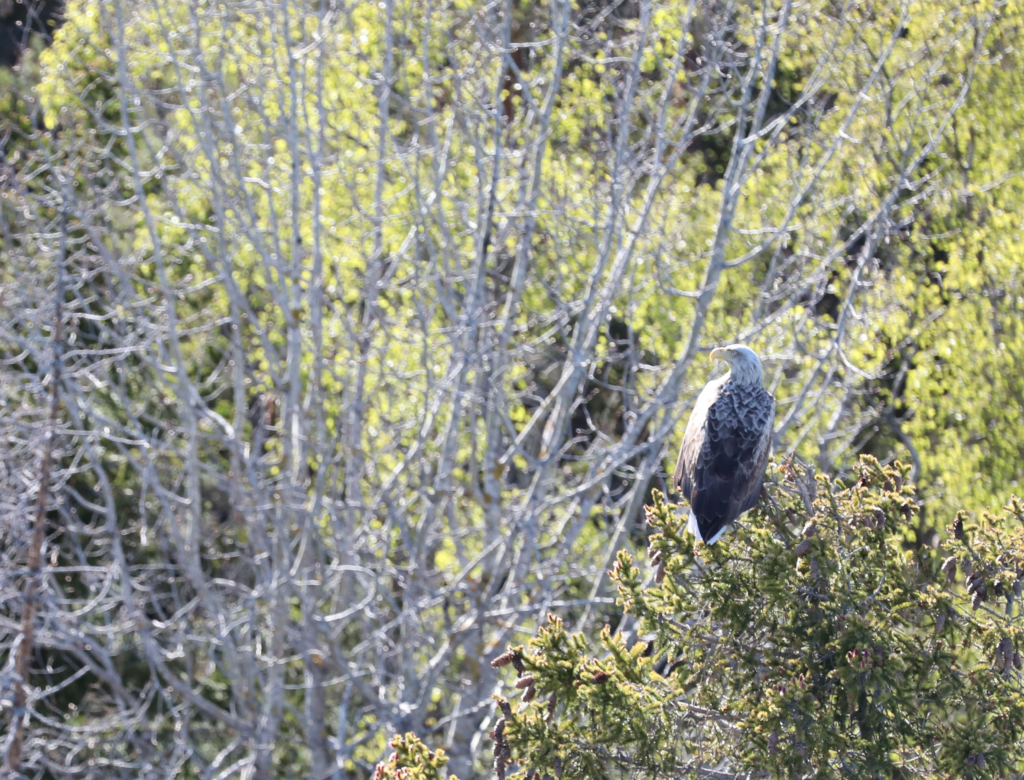
    In the meantime, most juveniles have dispersed, but birds from islands in the outer archipelago (Vida, Ulappa, Holme and Kobbe) still prefer staying on their parents’ territory. They have made some excursions, but so far have always returned.

    We lost signals from Pihka already in September due to poor battery management. We hope that a signal will return in spring. What we learned from this case is now helping us prevent the loss of more birds over winter.
  • New Publication!

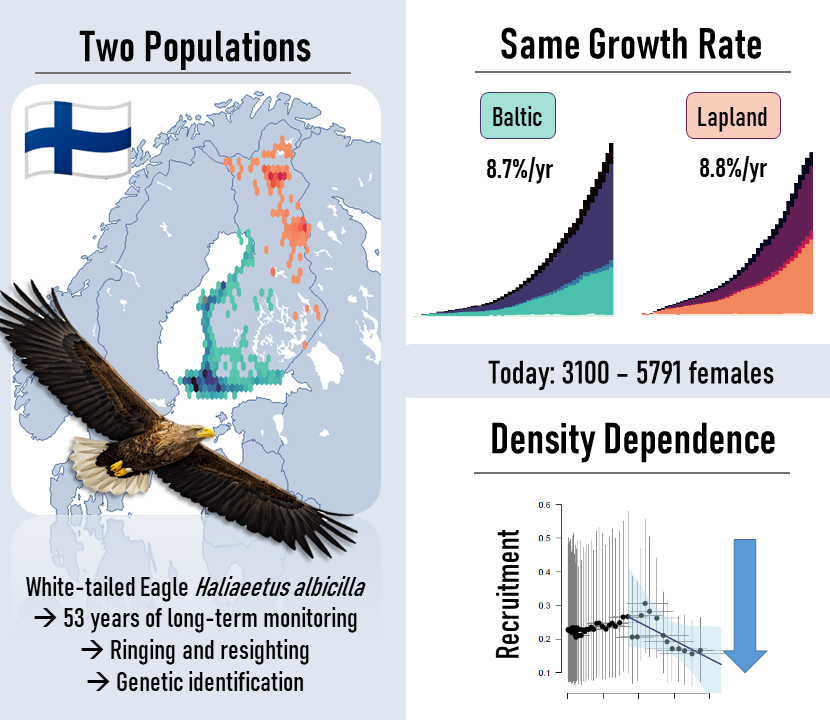
    A new paper from our group has just been published in Oikos. In this study, we use over 50 years of data from two Finnish white-tailed eagle populations – one in the Baltic Sea region and one in Arctic Lapland – to understand how the species has recovered from past declines. The scientific publication can be found here.

    We show that both populations have increased at similar rates, mainly because adult eagles survive very well. However, the details between this growth differ between regions. Survival of younger birds is higher in the Baltic Sea area, whereas adult survival is higher in Lapland. In the Baltic Sea population, we also find signs that as eagle numbers grow, young birds have to wait longer before they can get a territory and start breeding, leading to more non-breeding “floaters” in the population.

    These results show that similar trends in numbers can be driven by different underlying processes, and that conservation decisions should be based on understanding how each population works, not only on overall growth.

    This study is a collaborative effort between the University of Turku and the Swiss Ornithological Institute. We also warmly thank the volunteers of the Finnish white-tailed eagle working group, whose long-term nest monitoring, ringing, resighting reports, and sample collection made this research possible. Their dedication to the conservation of the white-tailed eagle over many decades is the foundation of this study.

  • The first eagles have dispersed!

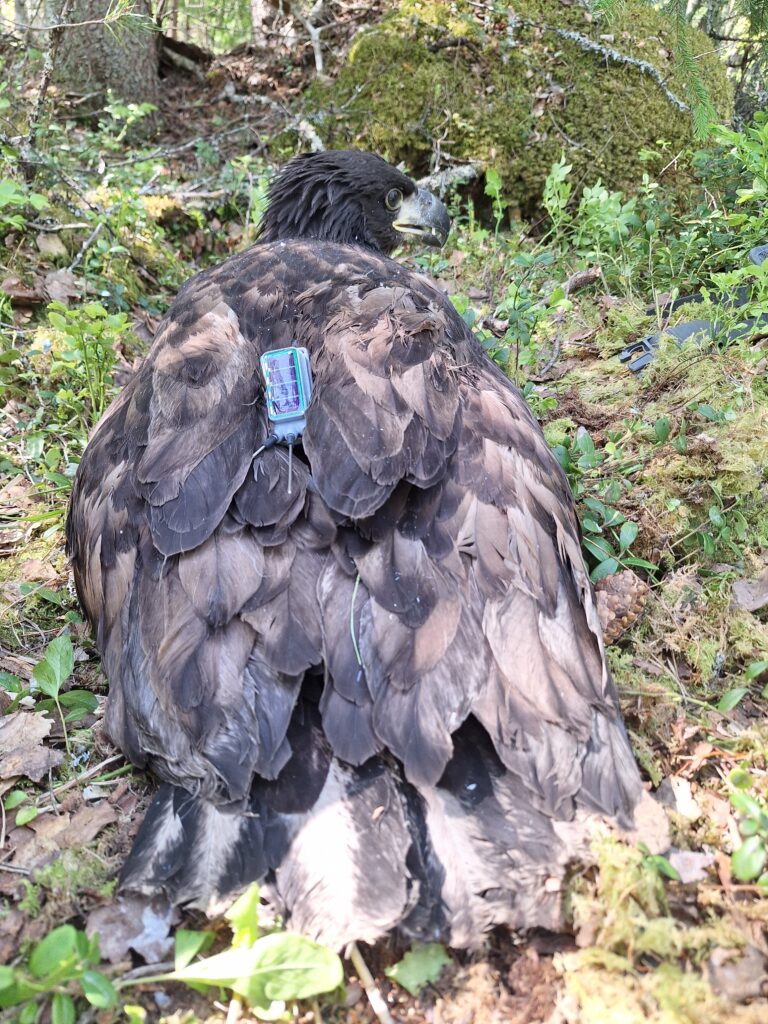
    In 2026, 20 young white-tailed eagles were GPS-tagged. While most birds are still around the parental territory, 7 have started their independent journeys and their GPS tracks can be seen on the map.

    The movements of individuals are quite different. Vellamo and Maininki flew to Russia already at the beginning of August. Vellamo was found deceased near Lake Onega, showing the risks of such early dispersal events.

    Maininki was last located near Nordstream 1 in Russia, with GPS jamming being evident. As Russian network connection can be poor, we suspect that Maininki flew further east and away from the Russian-Finnish border.

    Others are currently hanging out near Urjala.

    Pages will be updated as more birds disperse. Stay tuned!